A Wave, Almost Caught
2026.11.21The November sea was warmer than I’d expected.
By the fishing harbor at Koshigoe, a little beach town south of Tokyo, I hold a borrowed longboard under one arm. A wetsuit is an honest garment. I’d tried it on the night before and stood in front of the mirror for a while, saying nothing.
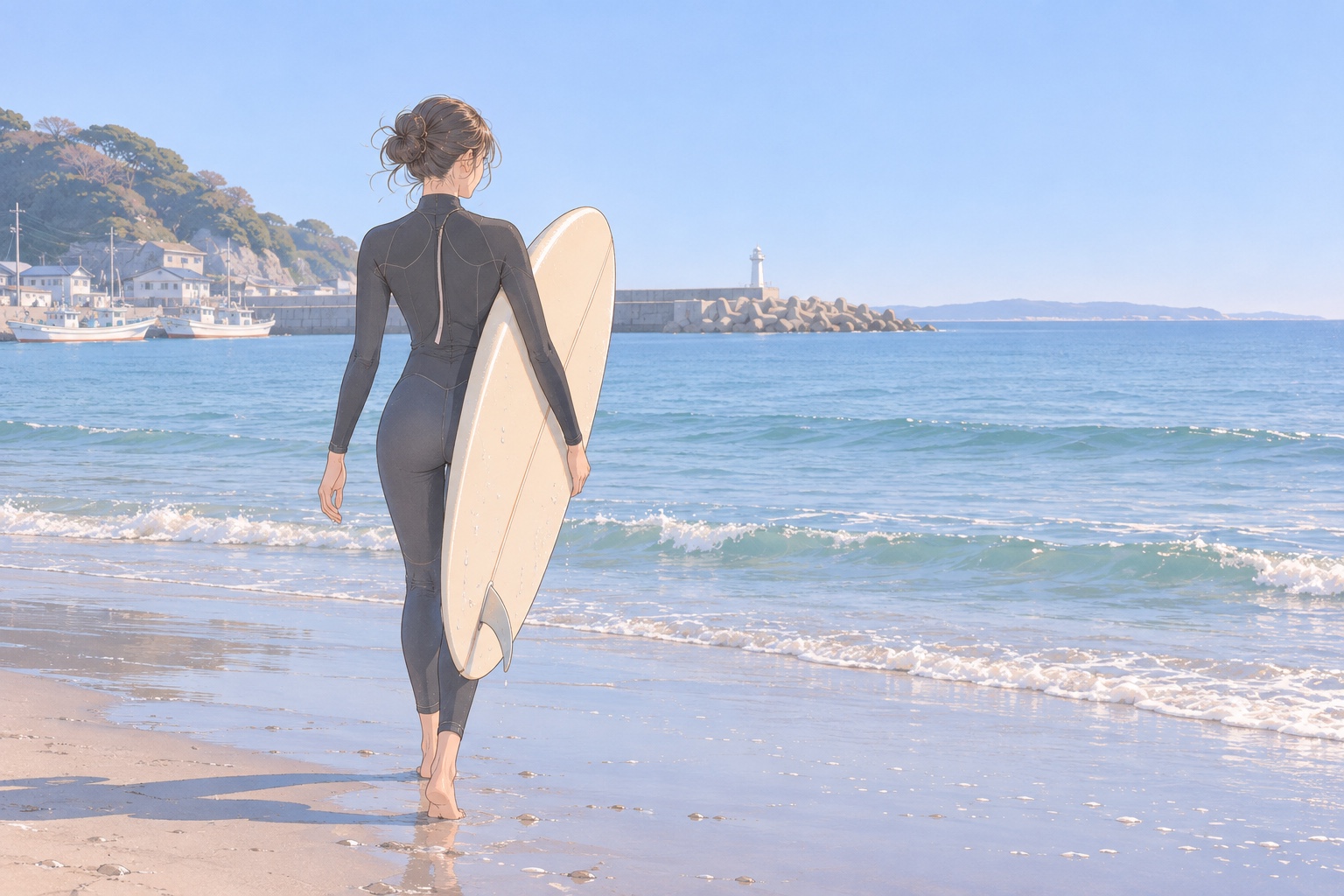
The last time I rode a wave, I was twenty-two. Autumn, San Diego. A shortboard, one season, and that was all.
The water back then belonged to sunburned locals. Waiting for sets, they traded jokes and laughed. I laughed too, understanding maybe half of it.
When they spoke to me, all I had was “Yeah” and “Cool.” When a good wave rolled in, they’d shout something short and let me take it. I never did learn what those words meant.
The waves at Koshigoe were small, and kind.
Paddle. Catch it. Try to stand. I make it as far as my knees, and then the sea takes me back. Somewhere along the way, for one brief moment, I thought I felt myself float above the board.
“You were riding that one. A little.”
She said it from the beach, where she’d been watching. Riding, or not quite riding. As answers go, after thirty years away from the sea, not bad.
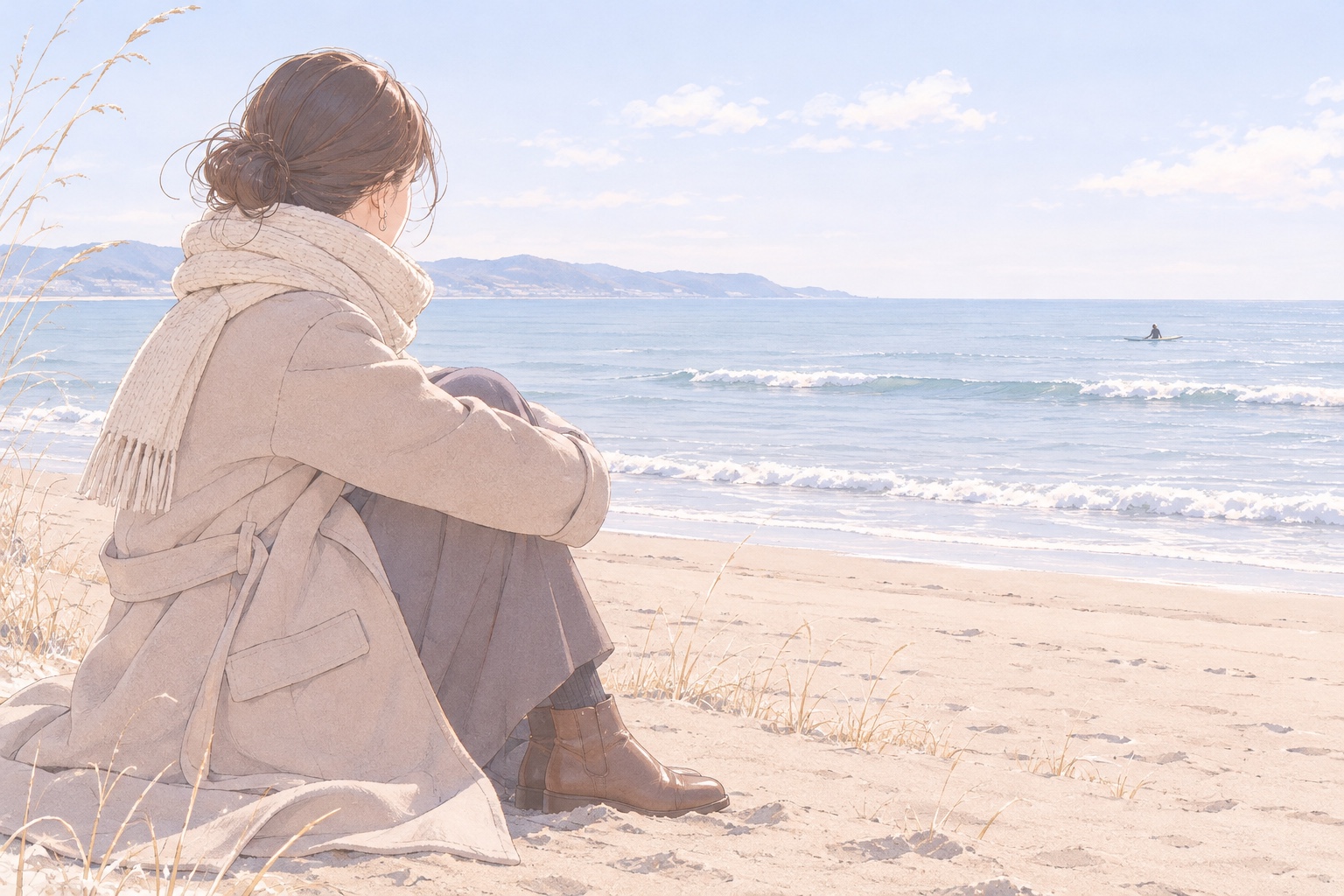
On the way home, we had curry at Shichirigahama. Through the window, the island of Enoshima floated on the water. Curry eaten with salt still in your hair tastes a little like luxury.
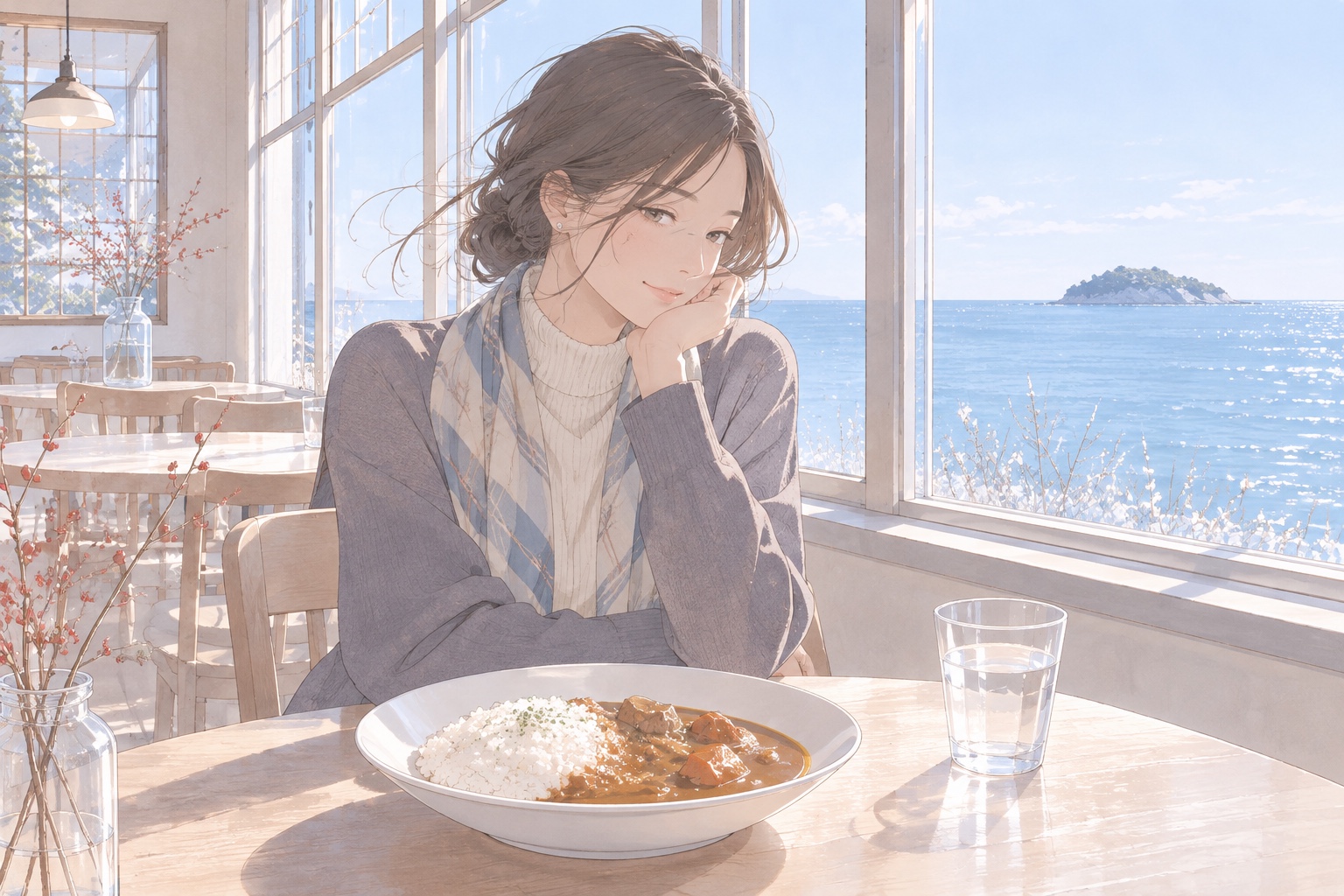
I set down my spoon and wondered. If my English had been a little better back then. If I’d known what they were shouting. That sea might have been a different color.
Come to think of it, English tripped me up long before that. A junior high classroom. The teacher always called on me the days I hadn’t done the reading. “What does this word mean?” The letters on the page suddenly looked like words from a country I’d never been to.
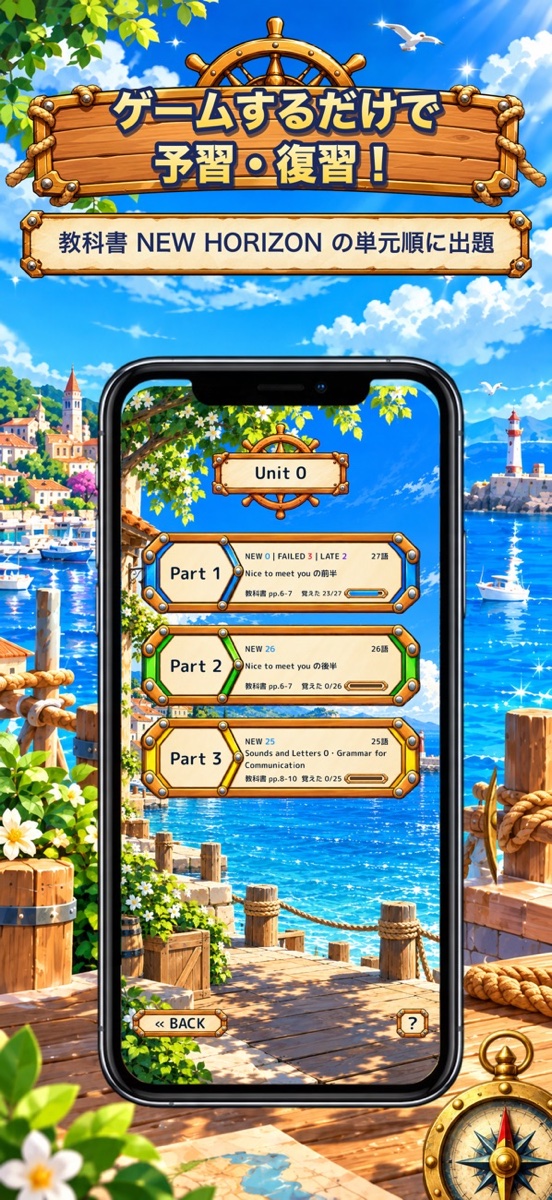
So I made one myself. 瞬発!中学英単語, a game that serves up words in the same order as New Horizon, the textbook most Japanese junior high kids grow up with. Play for a while, and the next lesson’s words are already in your head. Had I had it back then, I wouldn’t have panicked when called on. And the twenty-two-year-old me might have had a better line out there on the water.
Next time, I want to really stand. Ideally, while telling a joke in English.
About the app
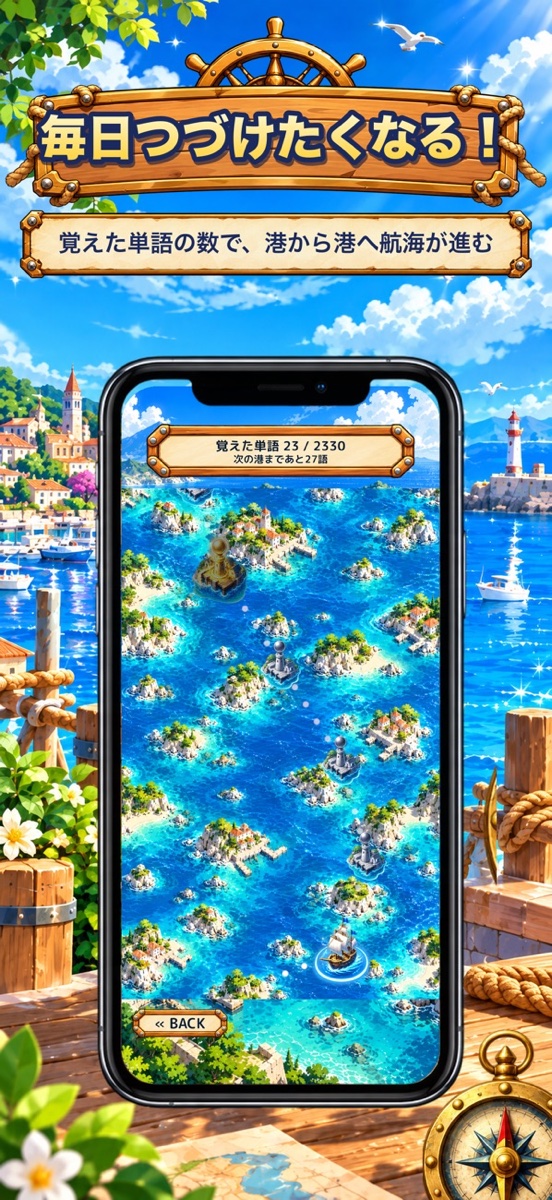
A vocabulary game for junior high school students in Japan, with words presented in the order of the NEW HORIZON textbook units. Students learn 2,330 words from grades 7 to 9 by answering four-choice questions, for class review, regular tests and high school entrance exams.
Key features
- 2,330 words from grades 7–9, organized by textbook Unit and Part
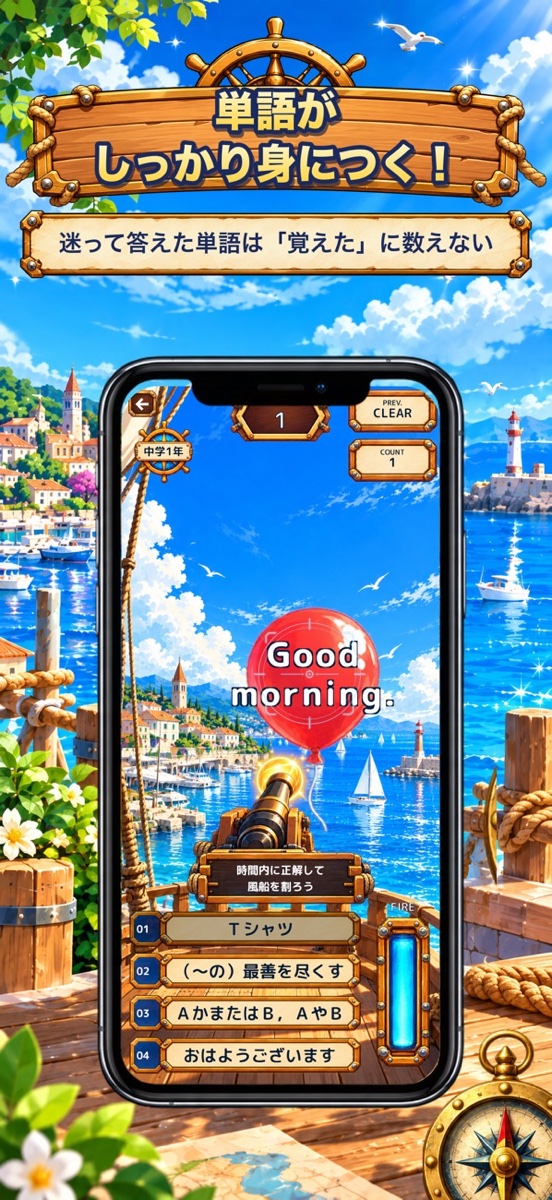
- Pick the right meaning from four choices to pop the word balloons; words answered slowly don't count as learned
- A record of correct, slow and wrong answers lets you practice only the words you find hard
瞬発!中学英単語